

One of the most overlooked realities in mental health is high-functioning distress, a psychological state in which individuals meet external expectations while internally struggling with significant emotional pain.
Drowning in Silence gives voice to this population: those who show up, perform well, and take on responsibility while privately feeling depleted, overwhelmed, or hopeless.
- The Psychology of the “Strong One.”
Think for a moment about the role you play in your life and the life of others.
Are you the dependable one? Are you the one responsible? Are you the one others lean on?
High-functioning individuals often develop competence early, sometimes in response to instability, trauma, or unmet emotional needs. Strength becomes identity. Reliability becomes survival.
Psychologically, these individuals may struggle to:
- recognize their own emotional limits,
- ask for help without guilt,
- acknowledge distress without self-judgment,
- rest without feeling unproductive or ashamed.
Their suffering is often overlooked, not because it isn’t severe, but because it is well hidden.
- Why High-Functioning Distress Is So Dangerous
Imagine breaking a bone but continuing to walk on it because you can.
The danger of high-functioning distress lies in invisibility. Because these individuals continue to meet obligations, their pain is rarely questioned by others or by themselves. This reinforces internal beliefs such as:
- “I shouldn’t feel this way.”
- “Others have it worse.”
- “If I can function, I must be fine.”
Over time, this internal invalidation increases the risk for burnout, depression, emotional collapse, and suicidal ideation. Drowning in Silence challenges the assumption that functionality equals wellness.
Being able to endure does not mean you are okay.
- Emotional Masking and Cognitive Dissonance
Pause and imagine smiling while feeling empty inside.
Maintaining a composed exterior while experiencing inner distress creates cognitive and emotional dissonance. The individual is forced to reconcile two conflicting realities: outward competence and inward suffering.
Psychologically, this dissonance is exhausting. Many readers of Drowning in Silence recognize themselves in the experience of smiling while internally unraveling a pattern that often precedes emotional breakdown.
The mask may protect reputation, but it erodes connection.

- Strength Without Support Is Not Resilience
Pause here.
Think about the times you kept going, not because you were well, but because stopping felt unsafe.
A crucial psychological insight in the book is this: resilience is not endurance without support. True resilience includes rest, connection, and emotional expression.
By addressing leaders, helpers, caregivers, and professionals directly, Drowning in Silence disrupts the cultural myth that strong people do not need care. It affirms that strength without support eventually becomes a liability, not because the person failed, but because no one was meant to carry everything alone.
- Reclaiming Help as Psychological Maturity
Rather than framing help-seeking as a weakness, the book reframes it as a sign of psychological maturity.
Recognizing limits, naming distress, and seeking support are signs of self-awareness, not failure. In a society that rewards productivity over presence, this reframing is essential, especially for those whose pain has gone unnoticed for far too long.
A Necessary Message for This Moment
As mental health conversations continue to evolve, addressing high-functioning distress is no longer optional.
Drowning in Silence meets this moment with clarity, compassion, and psychological depth, reminding readers that being strong does not require suffering alone.
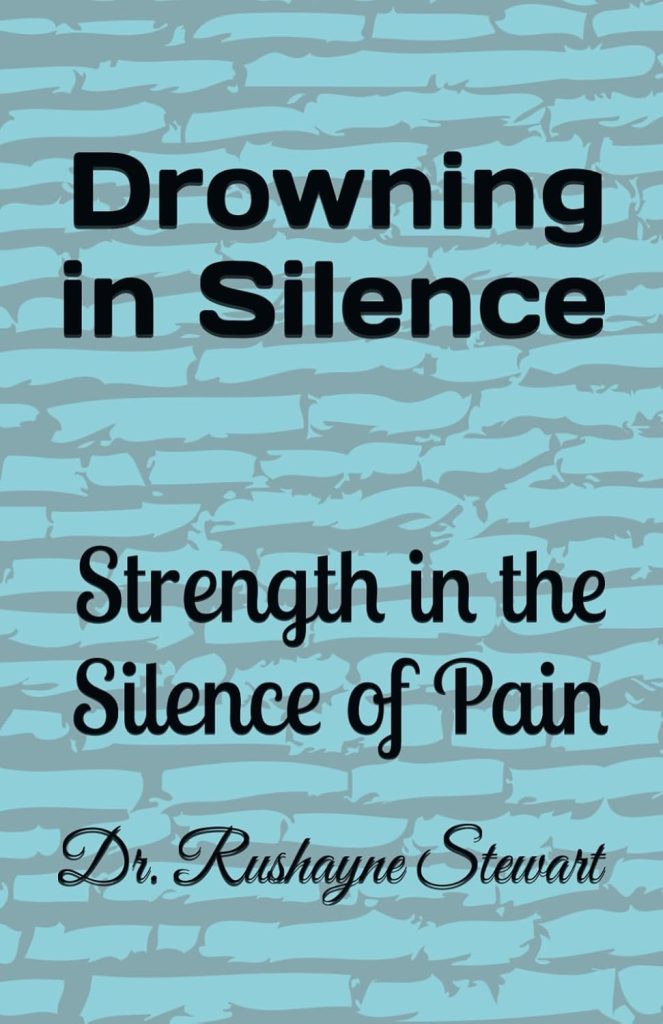
If you’re someone who has ever felt alone in your pain, smiled in public while unraveling inside, or wished someone could speak the truth you feel but can’t express, Drowning in Silence: Strength in the Silence of Pain by Dr. Rushayne Stewart is the book you’ve been waiting for. This compelling and deeply compassionate work meets you where you are—acknowledging hidden struggles like grief, anxiety, depression, and self-harm without judgment, and offering a path to understanding and healing that honors your humanity rather than dismisses your experience. Dr. Stewart blends psychological insight with faith-infused care, helping you see that emotional struggle does not mean spiritual failure and that hope is possible even in the quietest moments of pain.
If you are ready to feel seen, understood, and supported in your journey toward emotional restoration, find the book on Amazon here: Drowning in Silence: Strength in the Silence of Pain on Amazon (Paperback & Kindle)
Buying this book could be the first step toward transforming silent suffering into a story of resilience and renewed hope